
Employee Shuttle Services Designed for Corporate Offices and Multi-Site Operations

Trusted by millions of Aussies
Our shuttle programs give employees a predictable, single-seat commute that supports punctuality, attendance, and access to sites across CBD offices, business parks, industrial precincts, and regional locations.

Get a Quote
Thank you for your request for a quote.
Trusted by Leading Brands Across Australia
Australia’s leading brands trust BusCharter.com.au for their group transportation needs. Accredited by ISO 9001:2015 & QTA, we assure top-quality service.







Why Choose BusCharter.com.au for Your Employee Shuttle Needs?
Skilled & Dedicated Charter Team
- 24/7 access to our local, knowledgeable team
- Proactive communication from booking to drop-off
- Flexible in case of unexpected changes or delays
Outstanding Reliability & Value
- ISO 9001:2015 & Quality Tourism Accreditation (QTA)
- Focus on Trust and Transparency with Zero Hidden Costs
- Process-oriented approach toward ensuring service reliability
Operationally Tailored Transport Solutions
- Shuttle planning aligned with roster patterns, hybrid workdays, and catchment gaps
- End-to-end coordination covering route design, fleet allocation, and on-day operations
- Scalable service configurations as headcounts or utilisation change
How Australian Employers Benefit from Employee Shuttle Programs
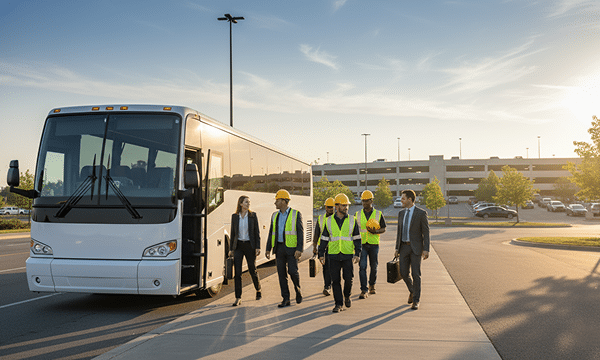
BusCharter.com.au’s employee shuttle programs address the commuting barriers organisations face due to public-transport gaps, limited parking, and inconsistent travel times. Our structured transportation services improve workforce access, support ESG commitments, and reduce the operational complexity of managing staff transport.
Predictable Commutes and Improved Attendance
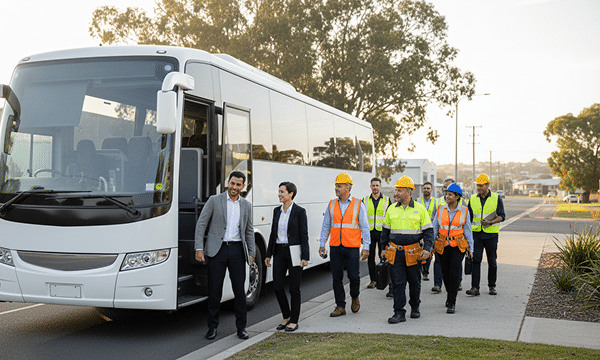
Many Australian worksites sit in business parks, industrial zones, or fringe suburbs where public transport requires long, multi-leg journeys that do not align with office hours or shift times. Employee shuttles replace these fragmented commutes with direct services between agreed catchment areas and workplaces.
- Reduce lateness and absenteeism due to missed connections, congestion, or unreliable public transport
- Provide a predictable, single-seat commute aligned with roster patterns and office schedules
- Lower commute-related stress, supporting engagement and willingness to attend on-site
Reduced Parking Pressure and Local Congestion
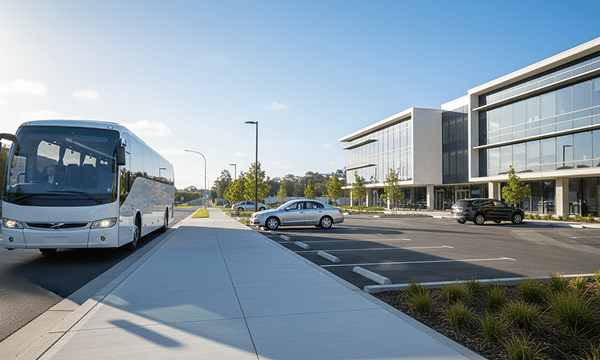
On many sites, limited or expensive parking and spill-over into surrounding streets create challenges for both employers and local councils managing access. As headcounts grow or hybrid days concentrate demand, car-based commuting places an increasing strain on available spaces and surrounding streets.
- Lower single-occupancy vehicle arrivals across offices and worksites
- Reduce pressure on existing parking capacity and avoid costly expansions
- Minimise spill-over parking in surrounding streets, supporting local access requirements
Wider Recruitment Catchments and Workforce Access
Roles based in locations that effectively require a car can exclude younger staff, lower-income workers, and those living in suburbs without strong transport links. Shuttle services make these worksites more accessible to a broader range of candidates.
- Expand access to candidates who do not drive or for whom private vehicle ownership is not feasible
- Improve the attractiveness of business parks, industrial precincts, and regional sites by providing reliable transport options
- Strengthen retention by positioning transport as part of the employment offering rather than an individual responsibility
Support for ESG and Commute-Related Sustainability Goals
With Australia’s increasing emphasis on ESG and sustainability reporting, commute-related emissions are receiving greater attention. Employee shuttles offer a practical way to consolidate trips, reduce car dependency, and document measurable improvements over time.
- Lower single-occupancy vehicle trips
- Supply data to support Scope 3 commute-emissions reporting
- Enable future transition to low or zero-emission fleet options

Operational Efficiency Through Data-Driven Routing and Reporting
Shuttle programs work best when routes, schedules, and capacity adapt to workforce patterns, supported by accurate utilisation and performance data.
- Route design and scheduling based on shift times, office hours, headcounts, and site access constraints
- Scalable capacity planning so services can ramp up or down as utilisation and workforce numbers change
- Options for usage reporting, manifests, and performance data to support internal reviews and budget decisions
Fleet Options Suitable for Employee Shuttle Programs
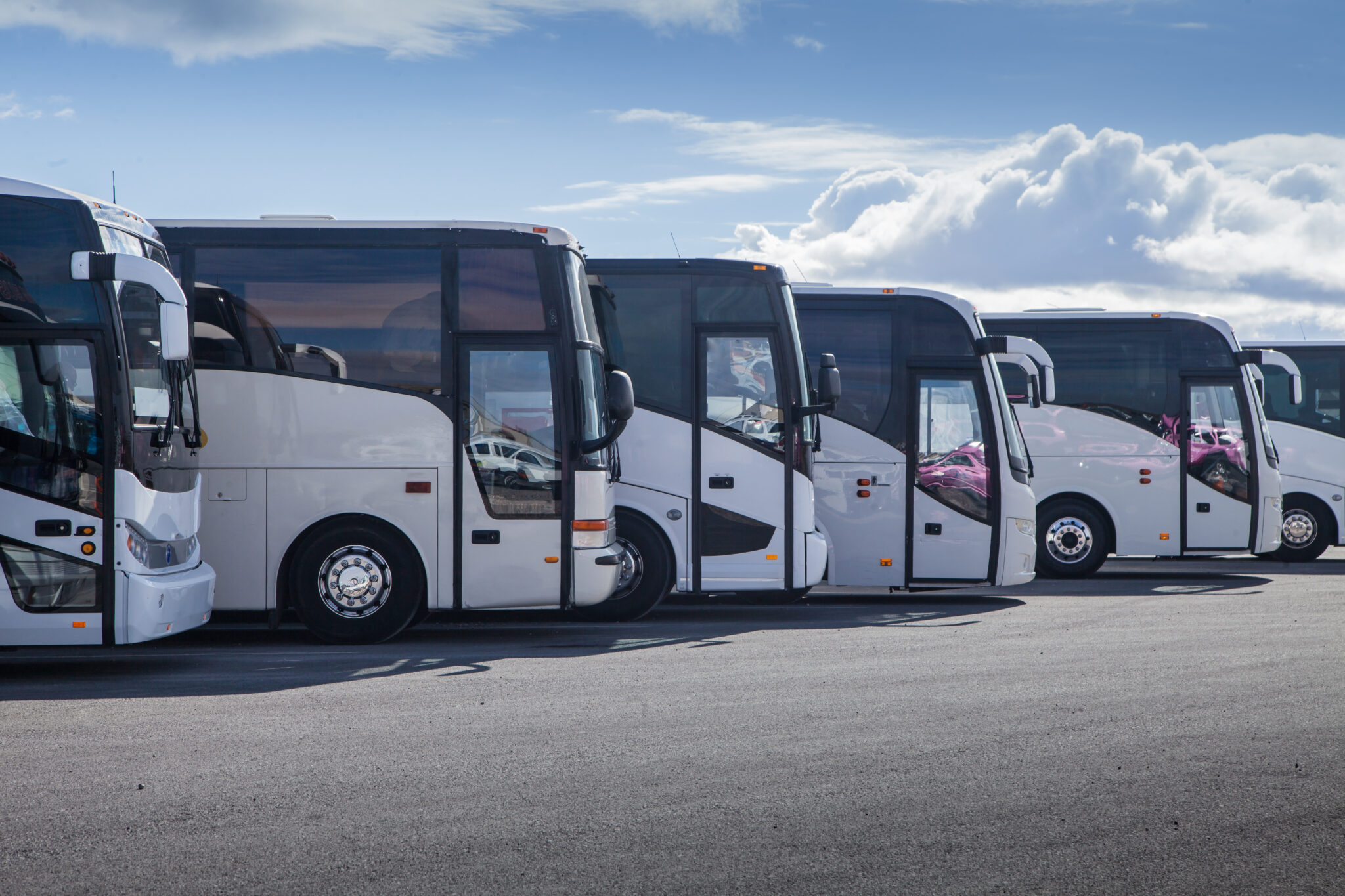
Choose from a broad range of vehicles, from minibuses and midi coaches to full-size coaches, scalable to roster patterns, headcounts, and site requirements. All vehicles include essential amenities for comfort and practicality.

50, 53, and 57-Seater Coaches
Full-size coaches are ideal for high-volume employee movements across CBD offices, business parks, industrial precincts, and regional worksites. They are best suited for point-to-point or limited-stop services for large groups, such as peak shift changes or long-distance commuter routes.
33-Seater Midi Coach
Midi coaches are suited to medium-volume shuttle routes where full-size coaches are not required. They work well for daily staff movements, inter-site transfers, training-day transport, and regional shuttles that require comfort and efficiency.


Minibus Hire (11–24 Passengers)
Minibuses are ideal for low to medium-volume employee shuttles, short-distance connections to public transport hubs, last-mile loops, and shift-based operations with staggered demand. They are cost-effective and flexible for suburban or regional routes.
7-Seater People Movers
7-Seater People movers support smaller shuttle loops, last-mile connections, or specialist staff movements where flexibility and rapid dispatch are required. They are suitable for low-volume routes, contractor movements, or linking staff to nearby transport hubs.

How We Plan and Operate Employee Shuttle Programs
Employee shuttles work best when planned as an ongoing program rather than ad-hoc bookings. Our structured process ensures services align with workforce patterns, safety requirements, and governance expectations.

Initial Scoping and Data Review
We begin by understanding how your workforce travels and how your sites operate, including commuting patterns, roster structures, hybrid days, and access constraints.
- Review headcounts, roster patterns, and operating hours
- Map catchment areas and identify transport gaps
- Assess access windows, site conditions, and constraints

Route Design and Scheduling
Using this information, we design routes and timetables that reflect how your people work and when they need to arrive.
- Propose route options that balance travel time and coverage
- Align shuttle times with roster start and finish times
- Establish repeatable timetables staff can rely on

Capacity Planning and Fleet Allocation
Shuttle programs need to scale with utilisation. We match vehicle types and frequencies to expected demand and adjust as patterns evolve.
- Select vehicle sizes based on usage forecasts and site needs
- Plan capacity and frequency for different shifts or days
- Review utilisation data to recommend adjustments

Safety, Compliance, and Driver Standards
Shuttle operations form part of your duty-of-care obligations. We use vetted drivers, compliant vehicles, and safety processes aligned with WHS expectations.
- Drivers vetted and vehicles maintained to regulatory standards
- Services aligned with fatigue rules and road-risk controls
- Documentation available to support WHS and governance needs

On-Day Operations and Contingency Handling
Reliable performance requires coordination and the ability to adjust when circumstances change.
- Provide trip details and instructions to drivers and coordinators
- Monitor services and adjust for timing changes or extra runs
- Maintain communication channels for time-sensitive issues

Reporting and Continuous Improvement
Usage data and on-ground feedback help refine the shuttle program over time and support internal reviews.
- Offer reporting on passenger counts and route utilisation
- Share insights that may guide route or schedule changes
- Support periodic reviews against attendance and sustainability goals
Employee Shuttle Service FAQs
How do you determine the right routes and schedules for employee shuttles?
We analyse staff postcodes, roster patterns, hybrid-day peaks, and site access constraints to design routes that close public-transport gaps. Using demand data and feedback, we keep detours minimal and travel times competitive with driving, then refine stops and schedules as usage patterns emerge.
Can shuttle services support different shifts or hybrid work patterns?
Yes. Services can align with staggered shifts, rotating rosters, and peak in-office days, including early or late starts where fatigue risk is higher. With optional booking tools and utilisation data, capacity and frequency can be adjusted so you are not running under- or over-capacity on quieter days.
What vehicle types are typically used for employee shuttle programs?
Vehicle selection depends on demand, street access, and accessibility needs. Minibuses (11–24 seats) suit suburban and short-distance routes, 33-seat midi coaches support medium-volume services, and full-size coaches are used for high-volume or regional travel. Right-sizing vehicles helps maintain comfort, control costs, and reduce emissions per passenger.
How is safety managed for daily employee transport?
Shuttle operations follow WHS and traffic-management expectations. Vehicles are GPS-tracked, maintained to regulatory standards, and operated by vetted drivers. Schedules are planned with fatigue guidance in mind, and safety documentation, including incident logs and compliance records, support internal governance or audit reviews.
Can you provide reporting for HR, operations, or ESG reviews?
Yes. Reporting can include passenger counts, route utilisation, on-time performance, and distance or vehicle data. These insights support workforce planning and budgeting, and provide activity data for Scope 3 ‘employee commuting’ emissions calculations, helping demonstrate the impact of shifting staff from single-occupancy cars to shared shuttles.
Explore Other Corporate Transportation Solutions
Comprehensive transport services for every aspect of your business.
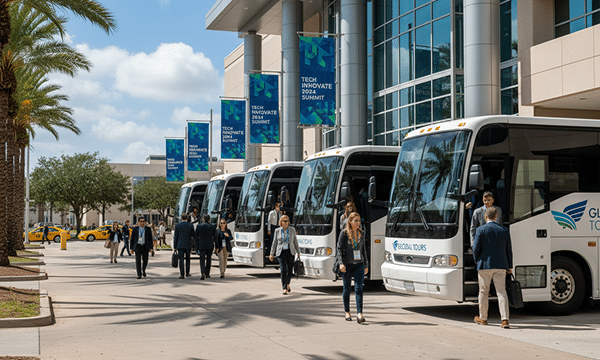
Structured shuttle programs that move delegates, exhibitors, and VIPs between airports, hotels, and venues on time and according to event schedules.
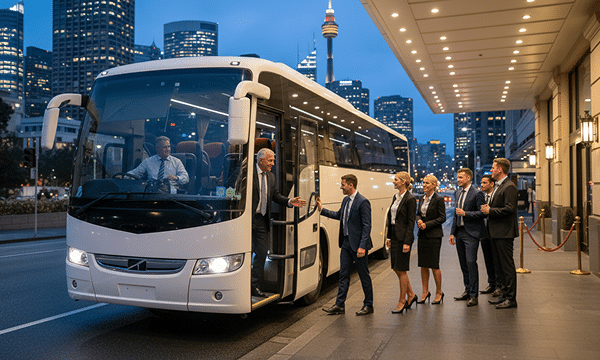
Transport for strategy days, retreats, team activities, gala dinners, and client events, with routes planned around session times and return schedules.
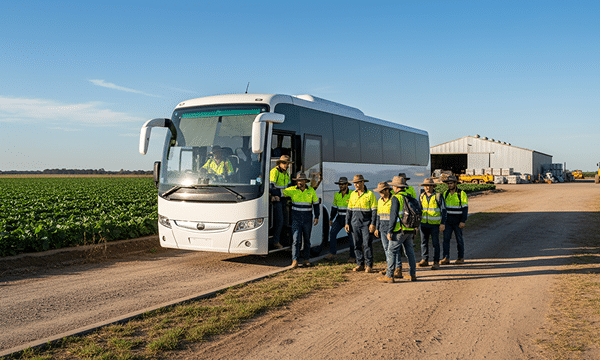
Transport programs aligned with roster cycles, early/late shifts, and seasonal workforce peaks, scalable across suburban, regional, and remote locations.
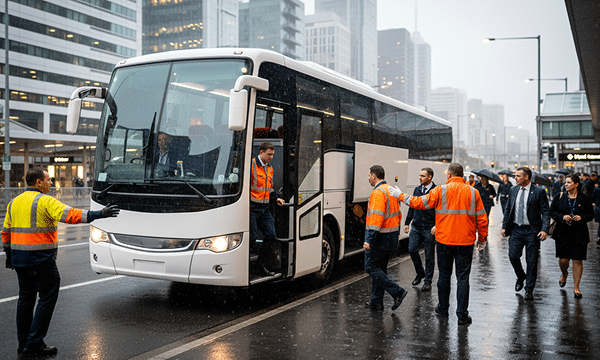
Pre-planned or rapid-response transport solutions for rail outages, temporary site closures, or business-continuity requirements.

Safe, compliant crew movements between airports, camps, and remote sites, aligned with shift rotations, fatigue rules, and mine-operating requirements.

Improve Workforce Access With a Structured Shuttle Program
Our clients have reported stronger attendance, improved recruitment access, and reduced pressure on parking and local roads through structured employee transport programs. If you’re reviewing options for a single site or multiple locations, our team can assist with route design, capacity planning, and fleet selection.